Many solar salespeople pitch "Net Metering" as the ultimate way to eliminate your electricity bill. However, when you dig into the engineering details, local fees, and utility rules, you quickly discover that Net Metering is heavily weighted in favor of Meralco—leaving the homeowner with administrative headaches, extra costs, and wear-and-tear on their equipment.
For homeowners and businesses in Bulacan, Cavite, Rizal, Laguna, and Metro Manila, there is a growing realization that enrolling in Net Metering can actually slow down your return on investment. Here is an in-depth review of the major issues with Meralco's Net Metering system and why smart solar owners are choosing other paths.
1. The Bureaucratic Nightmare (Red Tape & Fees)
Enrolling in Net Metering is not as simple as swapping a meter. It requires navigating multiple layers of local and national government departments, often taking 3 to 6 months of back-and-forth communication. The process requires securing approvals from several entities:
- Barangay Clearance & Zoning Permits: Securing neighborhood clearances for construction and grid integration.
- LGU Building & Electrical Permits: Submitting designs to your municipal hall or city engineer.
- Certificate of Final Electrical Inspection (CFEI): Scheduling local government inspectors to visit your home, inspect structural mounts, and verify that the installation complies with electrical safety codes.
- ERC Certificate of Compliance (COC): Paying filing fees and registering as a generation facility with the Energy Regulatory Commission (ERC).
The Hidden "Service Entrance" Cost
Before Meralco approves your application, their engineers will perform a strict field inspection. If your home's electrical service entrance (the metal piping, service wires, and meter box setup outside) is older or fails to meet the absolute latest standards, Meralco will reject the application until you upgrade it.
2. Paying for Your Own Specialized Meter
Standard Meralco meters are unidirectional. If you try to push excess solar energy backward through a standard meter, it cannot distinguish between imported and exported power. In fact, standard digital meters will record the exported electricity as additional consumption, causing your bill to increase instead of decrease.
To prevent this, you must pay Meralco for a specialized bi-directional meter (known as the Difference in Meter Cost or DIMC fee, which is typically capped at ₱3,000 for residential homes). You are literally paying the utility to install equipment they will use to buy cheap power from you.
3. The "Cheap Buy-back" Rip-off (50% Discount)
The financial model of Net Metering is heavily skewed. When you export power to the grid, Meralco does not credit you one-for-one.
| Billing Component | Rate (Approx.) | Who Pays Whom? |
|---|---|---|
| Retail Electricity Price | ₱11.50 - ₱13.00+ / kWh | You pay Meralco for grid power at night |
| Net Metering Export Credit | ₱5.00 - ₱6.00 / kWh | Meralco credits you for exported day power |
When you send excess solar electricity into the grid during peak sunny hours, Meralco credits you at their wholesale generation charge only (roughly ₱5.50 per kWh). They strip out all transmission charges, distribution charges, taxes, and system losses. But at night, when your solar panels are dark and you pull power from the grid, Meralco bills you at the full retail rate of ₱12.00+ per kWh. Essentially, you sell them power at a 50% discount and buy it back at double the price.
4. Continuous Max Load & Inverter Degradation
In a solar setup designed to export energy, the inverter is constantly running at full output during sunny hours to push all excess electricity onto the public grid.
Solar inverters are electronic power devices. Running them at 100% capacity continuously generates extreme thermal heat, placing severe stress on internal capacitors and silicon components. This constant high-load stress can significantly shorten the useful lifespan of your solar inverter, forcing you to replace this expensive component years earlier than expected.
5. Grid-Tie Vulnerability: Zero Power in a Brownout
Perhaps the biggest disappointment for Net-Metering users is blackout behavior. Net-Metering requires a Grid-Tie system. Under national safety rules (specifically the anti-islanding protection in standards like IEEE 1547 and UL 1741), when the Meralco grid goes down during a typhoon, maintenance, or high-load summer blackout, your grid-tied inverter is forced to shut off instantly. This prevents your panels from feeding live voltage into lines that utility technicians might be servicing.
The Smarter Alternatives
Instead of dealing with Net Metering bureaucracy and unfavorable terms, you can maximize your solar savings immediately through two superior options:
Option A: Zero-Export Grid-Tie
Install a smart Current Transformer (CT) clamp/limiter on your main breaker panel. The limiter reads your home's real-time electricity consumption and throttles solar generation to match it exactly. No energy is exported back to Meralco.
- No Meralco net-metering application or delays
- No PEE signatures or building permits
- No expensive service entrance upgrades
- Immediate savings from day one
Option B: Hybrid System with Batteries
Instead of giving excess daytime solar power to Meralco at a discount, store it in premium Lithium Iron Phosphate (LiFePO4) batteries. At night, run your air conditioners and appliances off the battery, saving the full ₱12.00/kWh retail rate.
- Automatic backup power during typhoons & brownouts
- Save the full retail value of every watt generated
- Clean, modern technology with a 10+ year battery lifespan
- Complete power independence from the utility grid
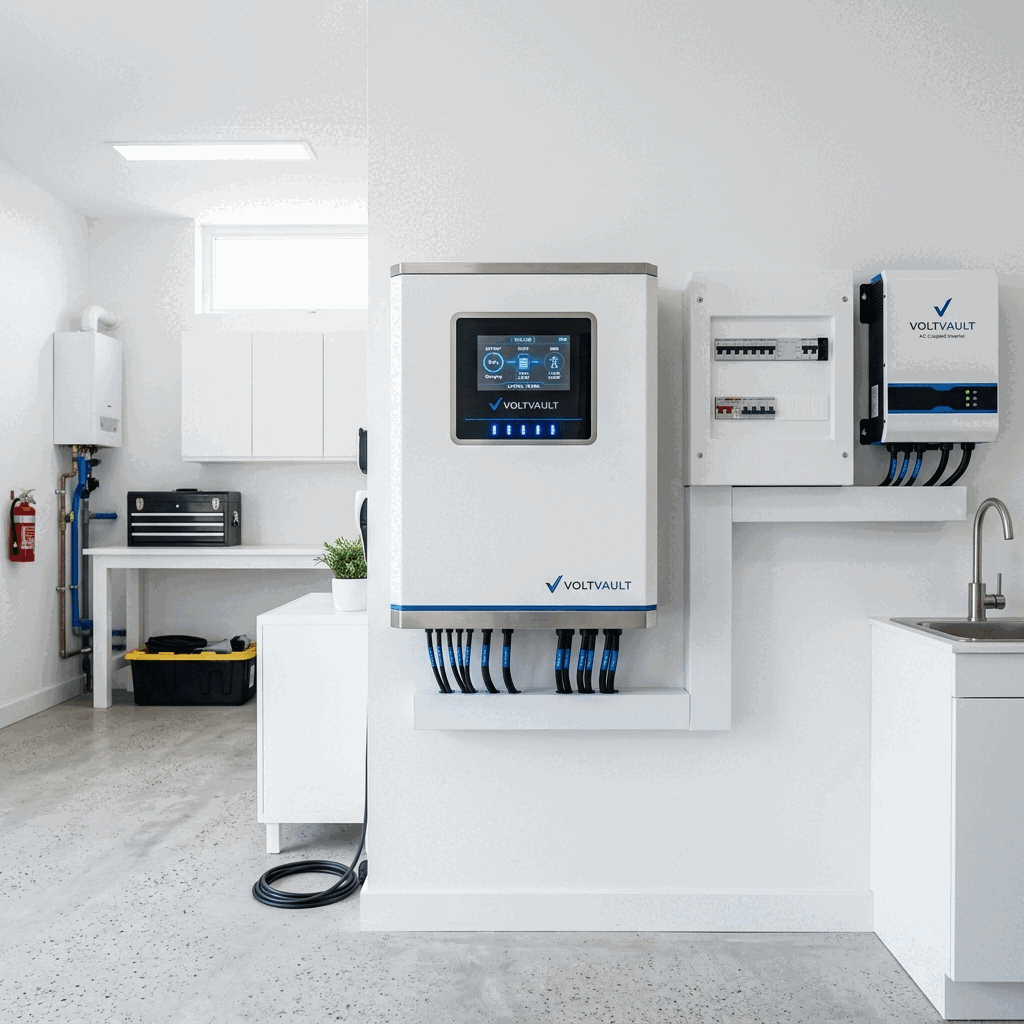
Figure 1: Premium wall-mounted Lithium LiFePO4 home battery storage system used in DUNYS Hybrid Solar packages to store excess solar power and provide backup during brownouts.
Save on Electricity Without the Meralco Red Tape
DUNYS Solar specializes in both smart Zero-Export systems and premium Hybrid solar packages with LiFePO4 battery backups. Schedule a structural and electrical site survey today.
Request Free Assessment